

Most of us know what it feels like to carry stress in our bodies. Tight shoulders. A racing mind at bedtime. That low-level tension that never really switches off. It’s no wonder practices like massage and breathwork are becoming part of more people’s routines. Massage helps release what’s stored in the muscles. Breathwork helps settle what’s spinning in the mind. On their own, they’re effective. But together? They create space for rest that goes beyond surface-level relaxation. This piece looks at how the two practices support each other, what can sometimes get in the way, and simple ways to make the most of combining breathwork and massage for deeper relaxation.
How Breathwork and Massage Complement Each Other
Think about the last time you had a massage. You walked in carrying the day on your shoulders — emails unanswered, jaw tight, mind still buzzing. The practitioner started working, and while your back began to ease, your chest felt stuck. The breath stayed shallow. You wanted to let go. It’s just that a part of you kept holding on.
That’s exactly why breathwork belongs in the room. Massage handles the knots and stiffness you can feel with your hands, whereas breathwork works on the tension you carry inside — the racing thoughts, the nervous system that doesn’t slow down just because your muscles do.
Put the two together, and you stop fighting the split. The body softens, the breath deepens. The breath calms, the body follows. One supports the other, and suddenly you’re not just relaxed; you’re reset.
When Relaxation Doesn’t Come Easily
There are days when the body loosens, but the mind keeps running. Or when you try to take a slow breath and instead your chest feels tight, almost jumpy. It can happen on the table, right in the middle of a session, and it’s frustrating — like your own system is working against you.
That’s where a little outside support matters. Sometimes it’s not about pushing harder to relax, but about having ways to steady yourself when stress or a panic attack edges in. It helps to learn how to ease the symptoms so the breath and the body know how to deal with panic attacks and aren’t pulling in opposite directions. Once they stop doing that, the massage and the breathing can finally do what they’re meant to do: work together.
Making the Most of Breathwork and Massage for Deeper Relaxation
Knowing why the two practices complement each other is one thing. Actually getting them to work in sync is another. That said, here is some actionable advice for combining breathwork and massage for deeper relaxation – the right way!
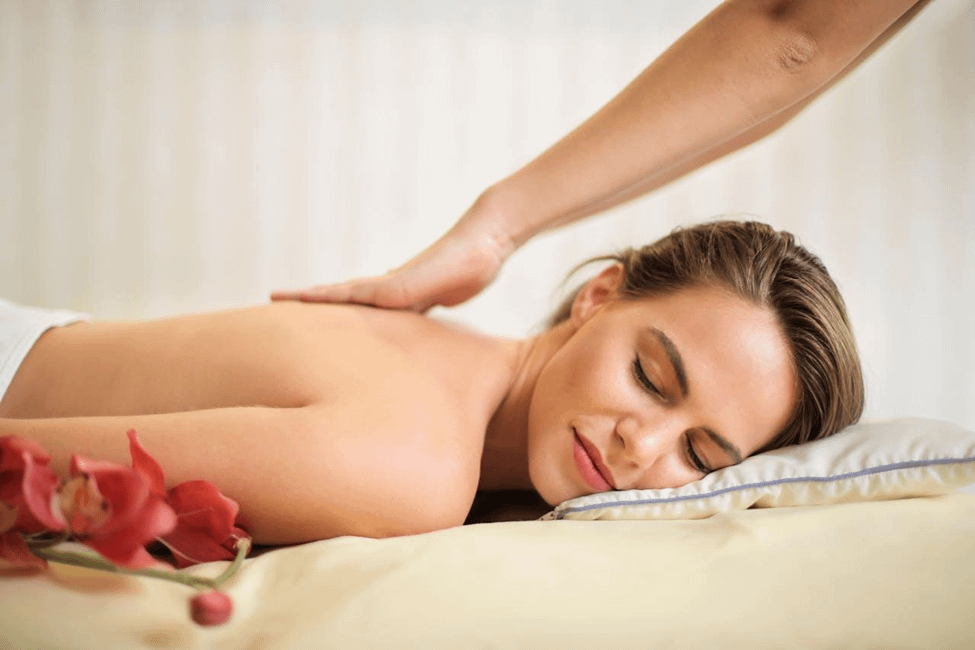
The right environment sets the tone — soft lighting, steady breath, and a relaxed body make the session more effective.
Alt. text: A woman lying on her back with eyes closed, candle and flowers nearby
Settle in Before You Begin
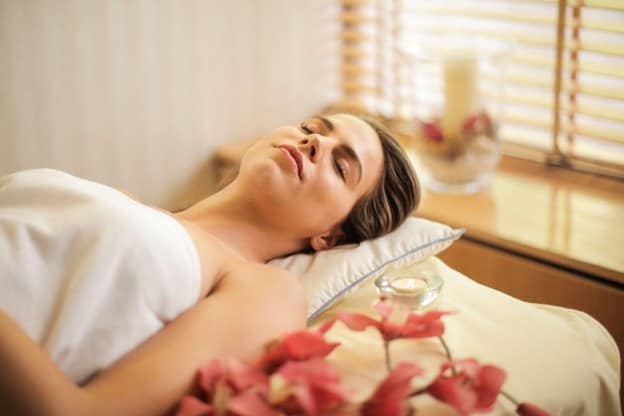
Most of us rush into appointments still half in work mode, carrying the day on our backs. If you climb straight onto the table without pausing, it can take half the session just to catch up with yourself. A couple of minutes of slow, steady breathing before you lie down can change everything.
And if you’re curious about which approach suits your needs best, it’s worth exploring the different types of massage available. The right style can make your breathwork feel even more natural and the relaxation more complete.
Let the Breath Lead During Tense Spots
When a therapist finds a tender point, the instinct is to tighten up and hold your breath. It’s almost automatic. But holding only makes the release harder. Try exhaling into that exact spot instead. Letting the breath move through the discomfort makes the pressure more bearable and helps the muscle let go instead of fighting against it.
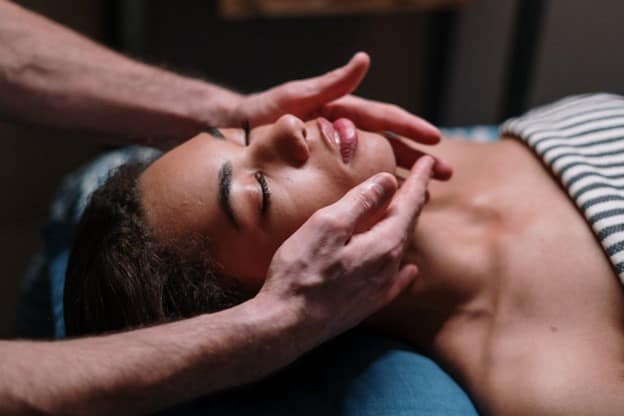
Targeted techniques, paired with steady breathing, show how breathwork and massage for deeper relaxation work hand in hand.
Stay Present Without Forcing It
You don’t need to track every inhale like homework. Just notice when the breath goes shallow — that’s usually the moment tension or worry is sneaking back in. Instead of correcting it with a big, dramatic inhale, try softening your exhale. It will bring you back without pulling you out of the experience.
Close With Intention
The end of a massage is often when people flip back into “what’s next” mode — phone in hand, shoes on, back to the day. But if you can linger for even thirty seconds, breathing slowly before you get up, the calm holds longer. It seals the work you’ve just done instead of cutting it off midstream.
What the Science Says
Breathwork and massage work wonders for relaxation. But you don’t have to take our word for it. The fact is, studies back up what many of us already feel.
Slow-paced breathing shows it does more than “help you relax.” It actually calms the entire nervous system—people who practice steady breathing experience measurable drops in anxiety and stress levels.
Massage has its own track record, often leading to lower cortisol, slower heart rate, and improved sleep quality after sessions. And when the two are combined, the effects don’t cancel each other out, as we’ve seen — they stack.
Bringing It All Together
When you look at it closely, breathwork and massage aren’t two separate practices you have to juggle. They’re different entry points to the same goal: helping your body and mind let go. Massage unwinds what’s locked into the muscles. Breathwork reminds your nervous system that it’s safe to settle. You don’t need complicated routines or hours set aside to feel the benefits. A few steady breaths before and during your session. A pause at the end instead of rushing out the door. Those small choices make the difference between surface-level relief and a deeper reset. Think of it less as “another thing to do” and more as a way of meeting yourself halfway. Your body is already trying to relax. Your breath is already trying to steady you. All you’re really doing is combining breathwork and massage for deeper relaxation.