
Look around any train platform, waiting room, or coffee shop and you will see the same posture: heads bowed, chins tucked, eyes on a screen. That posture has a nickname, tech neck, and it is one of the most common reasons people develop neck and shoulder pain today. The condition is not a formal medical diagnosis, but the strain it describes is very real. In this guide, we explain what tech neck is, why it hurts, how to reduce it, and how massage therapy for neck pain may help you feel better.
What Is Tech Neck?
Tech neck refers to the pain and stiffness that come from spending long periods with your head tilted forward and down, as you do when looking at a phone, tablet, or laptop. It is closely related to what therapists call forward head posture, where the head sits ahead of the shoulders instead of stacked over them.
An adult head weighs roughly 10 to 12 pounds. When it sits directly above your spine, the neck supports that weight efficiently. As the head tips forward, the muscles at the back of the neck and upper shoulders must work harder to hold it up, and the load on the joints and discs increases. Imagine holding a bowling ball close to your body versus holding it with your arms stretched out. The farther forward it goes, the harder it feels.
Symptoms of Tech Neck
- Aching or stiffness at the back of the neck
- Tight, sore shoulders and upper back
- Pain between the shoulder blades
- Tension headaches that start at the base of the skull
- Difficulty turning the head fully
- A rounded upper back or shoulders that roll forward
- Tingling or aching that travels into the arm or hand in some cases
Many of these symptoms overlap with other conditions. For example, tension at the base of the skull is a common source of headaches, and arm tingling can sometimes involve the wrist, as discussed in our article on carpal tunnel.
Why Does Tech Neck Hurt?
Several things happen when you hold the same posture for long stretches:
- Muscle overload. The upper trapezius, levator scapulae, and neck extensors work continuously to keep your head up, which leads to fatigue, tight spots, and trigger points.
- Muscle imbalance. The chest and front-of-neck muscles shorten, while the upper back muscles weaken and lengthen.
- Joint stress. The small joints in the neck experience more compression when the head is forward.
- Reduced movement. Staying still for long periods means less blood flow and more stiffness.
- Stress. Tension in the shoulders often rises with mental stress, and screens tend to keep us in a constant state of alertness.
See a doctor if neck pain follows an injury such as a fall or car accident, comes with fever, severe headache, numbness or weakness in the arms, trouble walking, or pain that does not improve. After an accident, symptoms may take days to appear, and may be related to whiplash.
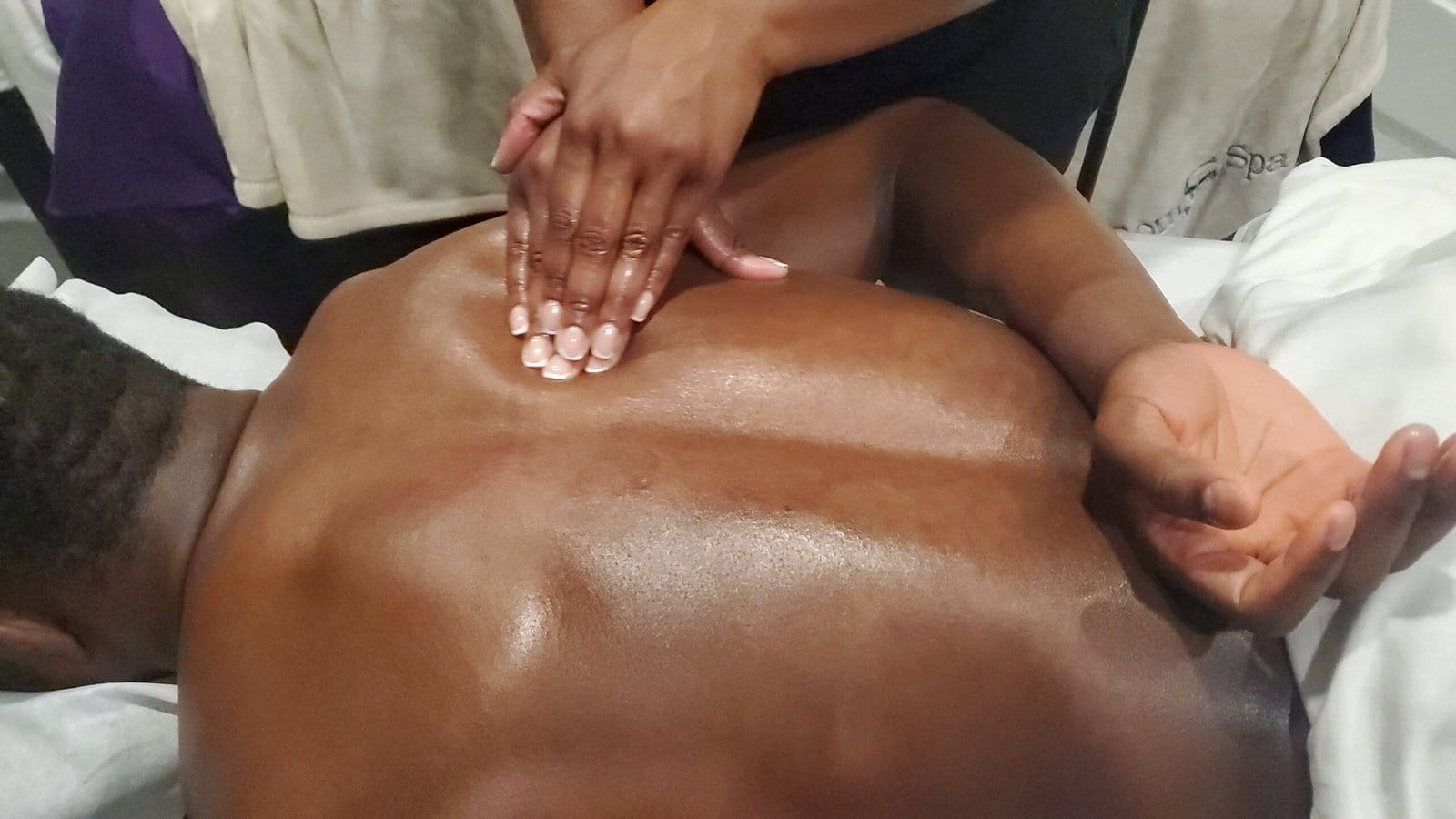
How Massage Therapy May Help Neck Pain
Because tech neck is largely a muscle and posture issue, many people respond well to hands-on care. A licensed massage therapist may use techniques to:
- Release tight muscles in the neck, shoulders, and upper back
- Ease trigger points that cause aching and referred pain
- Lengthen shortened muscles in the chest and front of the shoulders
- Improve circulation and reduce stiffness
- Increase range of motion, making it easier to turn your head
- Promote relaxation, helping reduce stress-related tension
We look at the whole picture, including the jaw, chest, upper back, and shoulders, since these areas all influence how your head and neck sit. You can see more about how we work on our neck pain page.
Ergonomic Setup Tips for Work
A few adjustments to your workspace can take significant strain off your neck:
- Raise your screen. The top of the monitor should be at or just below eye level. For a laptop, use a stand and a separate keyboard.
- Sit back in your chair. Keep your back supported, with your feet flat on the floor.
- Keep elbows close and bent. Your forearms should rest comfortably on the desk or armrests, with relaxed shoulders.
- Use a headset for long calls rather than cradling the phone between your ear and shoulder.
- Position documents at eye level on a holder instead of flat on the desk.
- Take breaks. Stand, walk, and look into the distance every 30 minutes.
Phone Habits That Help
- Hold your phone at eye level rather than looking down at your lap
- Switch hands to avoid always tilting to the same side
- Use voice-to-text or dictation for long messages
- Limit marathon scrolling sessions, especially in bed
- Set a reminder to check your posture throughout the day
Simple Neck and Shoulder Stretches
Move slowly, breathe, and stop if you feel sharp pain, tingling, or dizziness.
- Chin tucks: Sitting tall, gently draw your chin straight back as if making a double chin. Hold 5 seconds and repeat 10 times.
- Upper trapezius stretch: Tilt your ear toward your shoulder and gently use your hand to add light pressure. Hold 20 to 30 seconds per side.
- Doorway chest stretch: Place your forearms on a doorframe and gently step forward to open your chest. Hold 20 to 30 seconds.
- Shoulder blade squeezes: Draw your shoulder blades back and down, hold for 5 seconds, and repeat 10 times.
Signs Your Posture Habits Need Attention
Tech neck rarely announces itself with a single dramatic moment. It tends to build quietly. You may notice that your neck feels worse at the end of the workday, that your shoulders creep up toward your ears when you concentrate, or that a stiff neck greets you most mornings. Friends or family might point out that your head sits forward in photos. These are all useful clues. A quick self-check can help: stand with your back against a wall, heels a few inches away. If the back of your head does not comfortably touch the wall, your head may be sitting forward of your shoulders. This is not a diagnosis, but it is a good prompt to take posture and recovery seriously before small aches turn into chronic ones.
How Often Should You Get Massage for Neck Pain?
This depends on how long you have had symptoms, how demanding your work is, and how your body responds. Some people feel significant relief after a few sessions, while others prefer regular maintenance visits to keep tension from building up again. Your therapist will recommend a plan after your first appointment. If your pain has been around for months, you may also be interested in our chronic pain massage services.
Frequently Asked Questions
Can tech neck be reversed?
Often, yes, at least in terms of symptoms. Posture awareness, targeted exercises, ergonomic changes, and bodywork can all help. Long-standing habits take time to change, so patience matters.
Does cracking my neck help?
It may feel good temporarily, but frequent forceful cracking is not recommended. Gentle stretching and massage are safer ways to ease tightness.
Is neck massage safe for everyone?
Most people can safely receive neck massage, but tell your therapist about any recent injury, surgery, or medical condition. Techniques and pressure will be adjusted for your safety.
Relieve Neck Tension in New Hyde Park
You do not have to accept a stiff neck as the price of modern life. The licensed therapists at Somatic Massage Therapy, P.C. serve clients from New Hyde Park, Glen Oaks, Garden City, Floral Park, Bellerose, and across Queens. Call (516) 686-9557 or book your appointment online. Learn more about our medical massage therapy services or visit our blog for more wellness tips.